
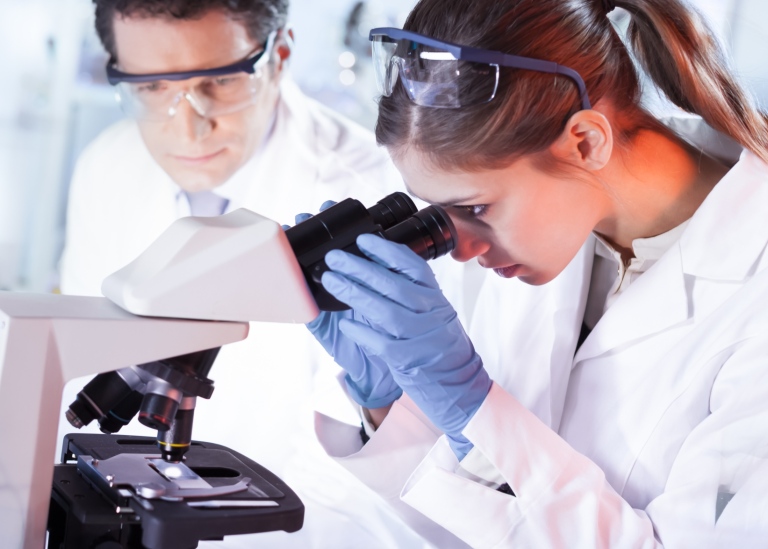
Microscopy and material analysis
What is it about?
Morphology/microscope methods and methods for determining material properties form the backbone of research on past landscapes, climates, human activities on-site and in the landscape.
Material and artefact analysis include the identification of plant remains, wood species/anatomy, charcoal identification and quantification, insects and other invertebrates, pollen and spores, diatoms, phytoliths, skeletal remains (human and animal). It also includes light and UV microscopy at magnifications from ca 8x to 100x.
What does ArchLab offer?
ArchLab offers several object and sample oriented morphology/microscope based identification methods, as well as several light and radiation based methods for determining material properties.
Methods for material and chemical analysis include: FTIR, Scanning Electron Microscopy (SEM), SEM-EDX and SEM-EDS, hyperspectral imaging/scanning, ICP-MS, NIR, (p)XRF, XRD, particle induced X-ray using MeV ions, Raman spectroscopy, other imaging methods (photography, object scale photogrammetry), and non-dating oriented stable isotopes (e.g. compound specific isotopes of carbon, nitrogen, sulphur, strontium, oxygen, mainly on collagen, lipids and fatty acids).
The following ArchLab laboratories perform microscopy and material analysis:
Stockholm Archaeological Research Laboratory (AFL)
Stockholm Osteoarchaeology Research Laboratory (OFL)